Revolutionary Modular Assembly System Innovation
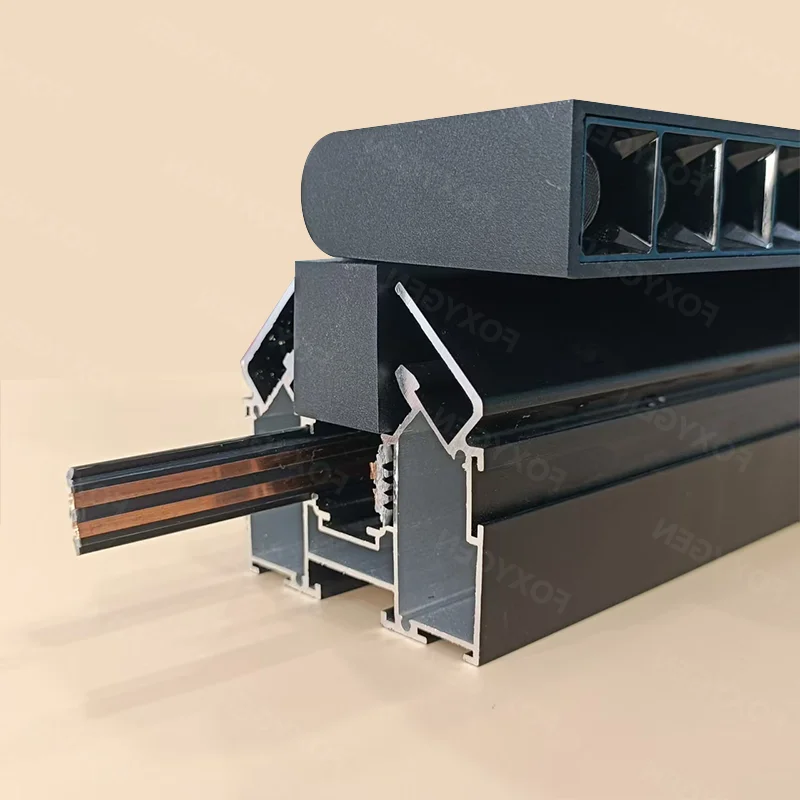
The modular assembly system built into linear aluminum profile represents a paradigm shift from traditional construction methods, eliminating the need for welding, drilling, or permanent modifications during installation. This innovative T-slot connection technology allows components to slide together and lock securely using standardized fasteners and connecting hardware. The system accommodates rapid reconfiguration, enabling users to modify structures quickly as requirements change without material waste or specialized tools. Professional installers report assembly speed improvements of up to 75% compared to conventional welded steel frameworks, translating into significant labor cost savings and faster project completion times. The precision machining of connection channels ensures consistent fit and alignment across all components, eliminating the dimensional variations common in field-welded assemblies. This accuracy reduces assembly time and improves finished product quality, as connections align perfectly without adjustment or modification. The reversible nature of connections means structures can be disassembled and relocated without damage, providing exceptional flexibility for temporary installations or evolving facility layouts. Quality control during the extrusion process guarantees that T-slot dimensions remain within tight tolerances, ensuring universal compatibility between different profile sizes and manufacturers. The connection system distributes loads evenly across joint interfaces, eliminating stress concentrations that can lead to premature failure in welded joints. Advanced connection hardware options accommodate various load requirements and joint configurations, from simple corner connections to complex multi-axis joints. The modular approach extends beyond structural assembly, incorporating integrated channels for routing electrical cables, pneumatic lines, and other utilities within the profile structure. This integration capability reduces installation complexity and improves system organization while maintaining easy access for maintenance and modifications. Training requirements for assembly teams decrease significantly, as the standardized connection methods eliminate the need for certified welders and specialized fabrication skills.
 ×
×



 EN
EN