
 EN
EN


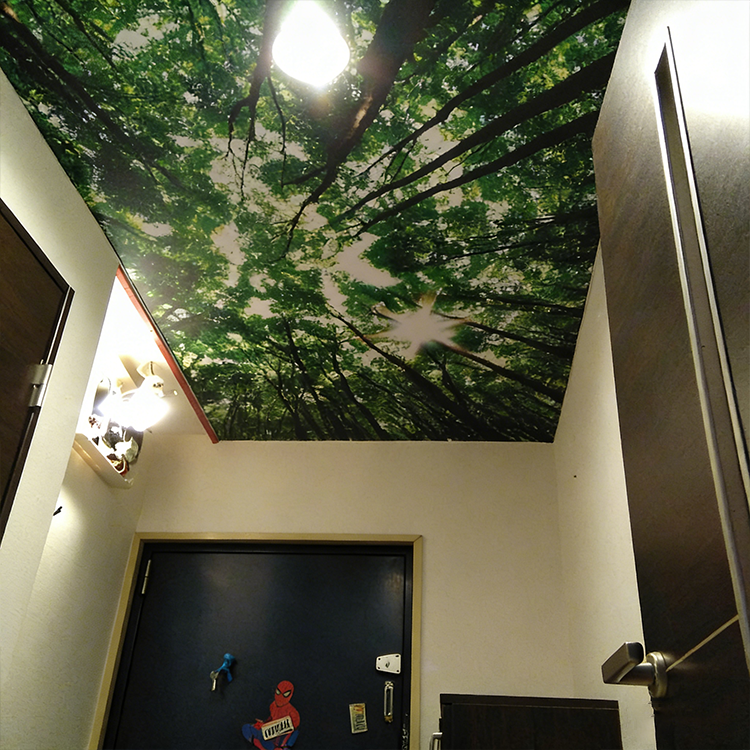
In the world of contemporary interior design, lighting is no longer just a utility — it is an architectural statement. Designers and architects working on commercial spaces, hospitality venues, retail environments, and upscale residential projects are increasingly turning to translucent stretch ceiling film as their preferred surface material for creating breathtaking backlit ceiling installations. The combination of light diffusion, printability, and structural flexibility makes this material uniquely suited to the demands of modern illuminated design.
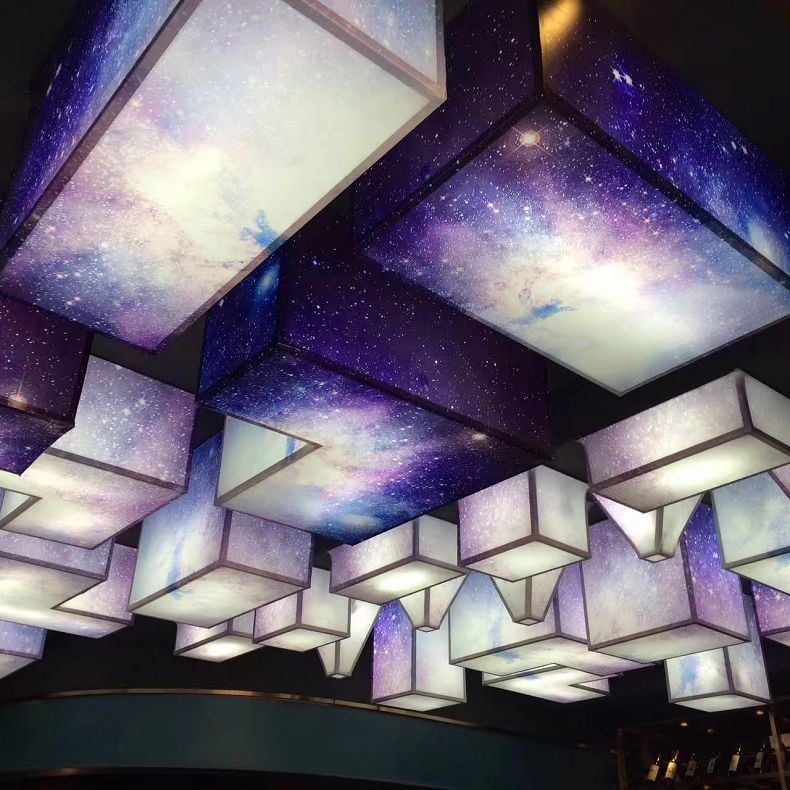
Understanding why translucent stretch ceiling film excels in backlit applications requires looking beyond aesthetics alone. Its physical properties, installation advantages, and long-term performance characteristics all converge to make it the logical material of choice when designers need a ceiling surface that interacts beautifully with light sources placed behind or above it. This article explores the core reasons why this film has become the go-to solution for backlit ceiling design across a wide range of industries and project scales.
The Science Behind Light Diffusion in Translucent Stretch Ceiling Film
How the Film Interacts with Light Sources
Translucent stretch ceiling film is engineered with a specific light-transmission quality that allows it to glow evenly when illuminated from behind. Unlike opaque surfaces that block light or fully transparent materials that reveal the raw mechanics of lighting rigs, this film softens and spreads the light uniformly across its entire surface. The result is a smooth, cloud-like luminescence that feels natural and immersive rather than harsh or clinical.
The PVC-based composition of translucent stretch ceiling film is carefully formulated to scatter incoming light at a micro-structural level. This scattering effect eliminates hotspots — those bright, concentrated points of light that appear when LED modules or fluorescent tubes are too close to a surface. For designers working with LED backlighting grids, this hotspot-elimination property is critical to achieving a polished, professional finish.
When the light source is positioned at the correct depth behind the film — typically between 15 and 30 centimeters depending on the fixture type and desired brightness — translucent stretch ceiling film produces a luminous plane that appears to emit light from within. This effect is particularly powerful in high-end retail stores, hotel lobbies, conference rooms, and luxury residential settings where ambiance drives the design brief.
The Role of Film Density and Opacity Rating
Not all translucent materials perform equally in backlit applications. The optical density of translucent stretch ceiling film is calibrated to balance two competing needs: sufficient opacity to hide the supporting structure and wiring above, and sufficient light transmission to allow the backlight to glow through clearly. This balance is what separates purpose-built stretch ceiling film from generic sheeting materials.
A well-formulated translucent stretch ceiling film typically transmits between 35 and 70 percent of incident light, depending on the grade selected. Lower-transmission grades are ideal for installations where the lighting framework is complex or uneven and needs more concealment. Higher-transmission grades are preferred where maximum brightness and color vibrancy are priorities, such as in branded display environments or entertainment venues.
The opacity rating also affects how the film handles printed graphics placed on its surface. A translucent stretch ceiling film with the correct density will allow backlight to illuminate printed images from behind, creating a lightbox effect that makes colors appear vivid and three-dimensional. This is a key reason why printable grades of the film are so valued in visual merchandising and themed hospitality environments.
Structural and Installation Advantages for Backlit Ceiling Systems
Tension-Based Installation Creates a Perfect Light Plane
One of the most compelling reasons translucent stretch ceiling film is perfect for backlit designs is the way it installs. The film is stretched across a perimeter track system and locked in place under tension, creating a perfectly flat and wrinkle-free surface. This tensioned plane is critical for backlit applications because any surface irregularity — a sag, a ripple, or a crease — would create visible variations in light distribution.
Traditional backlit ceiling solutions often struggle with surface flatness. Drop-in panels shift and warp over time, fabric-based solutions can sag under humidity, and rigid acrylic sheets are difficult to install without visible seams in large-format applications. Translucent stretch ceiling film overcomes all of these challenges by using a continuous tensioned membrane that maintains its geometry over the life of the installation.
The tension system also allows translucent stretch ceiling film to span large areas without intermediate support structures that would interrupt the lighting plane. In commercial spaces with open floor plans, this means designers can create uninterrupted glowing ceiling panels of five, ten, or even fifteen meters or more, producing dramatic visual effects that would be impossible with panel-based alternatives.
Accommodating Complex Ceiling Geometry and Custom Shapes
Modern architectural design frequently demands ceiling surfaces that go beyond simple rectangular planes. Curved forms, angled soffits, multi-level ceiling compositions, and organic shapes are increasingly common in premium interiors. Translucent stretch ceiling film is uniquely capable of conforming to these complex geometries because the PVC material stretches in multiple directions and can be shaped by the track system into almost any form.
For backlit applications, this geometric flexibility is transformative. A designer can create a backlit barrel vault, a wave-form ceiling, or a three-dimensional sculpted light surface using the same material and installation system that would be used for a flat application. The light behavior of the translucent stretch ceiling film remains consistent regardless of the shape, ensuring even glow and smooth gradients across curved and angular surfaces alike.
This adaptability makes translucent stretch ceiling film the preferred choice for custom-designed hospitality and retail environments where the ceiling is expected to function as a signature design element. When combined with dynamic LED systems that can change color or intensity, the shaped and backlit film surface becomes a fully programmable architectural feature.
Custom Printing Capabilities and Backlit Visual Impact
UV and Inkjet Printing on Translucent Stretch Ceiling Film
One of the most powerful features of modern translucent stretch ceiling film is its compatibility with high-resolution digital printing processes. Specialized grades of the film are formulated with surface coatings that accept UV-cured inks and inkjet-based pigments without compromising the film's light-transmission properties. This means that full-color graphics, photographic images, abstract patterns, or branded artwork can be printed directly onto the film and then backlit to create a stunning lightbox ceiling effect.
When a printed translucent stretch ceiling film is illuminated from behind, the backlight does not wash out the image as might be expected. Instead, the carefully balanced opacity of the film allows the light to amplify the colors, making them appear more saturated and vibrant than they would in a front-lit or non-illuminated state. Blues become more intense, greens glow with depth, and photographic detail takes on a near three-dimensional quality.
This printing capability opens up an enormous range of creative applications for the translucent stretch ceiling film. In retail environments, it can display seasonal brand campaigns at ceiling scale. In hotel lobbies and spas, it can evoke natural environments like sky, forest canopy, or underwater scenes. In corporate offices, it can display abstract art or brand graphics that reinforce the company's visual identity throughout the space.
Color Temperature Compatibility and Color Accuracy Under Backlighting
A frequently overlooked technical consideration in backlit ceiling design is the interaction between the color temperature of the light source and the color accuracy of the printed film. Translucent stretch ceiling film designed for printing applications is typically characterized for specific light source types — warm white, cool white, neutral white, or RGB variable — to ensure that printed colors read accurately under the intended lighting condition.
When the film's optical properties are matched to the light source specification, printed colors remain true to the original digital artwork. This level of color control is essential in brand-sensitive applications where color accuracy carries commercial significance. Designers working with translucent stretch ceiling film in such environments benefit from understanding the film's color rendering behavior before specifying LED systems.
For installations using tunable white or full-spectrum RGB LEDs, premium grades of translucent stretch ceiling film are engineered to perform consistently across a wide color temperature range. This ensures that as the lighting mood shifts throughout the day or in response to programmatic cues, the printed image retains its compositional integrity and does not develop unwanted color casts or uneven illumination zones.
Durability, Maintenance, and Long-Term Performance in Backlit Environments
Resistance to Heat and Prolonged Light Exposure
Backlit ceiling installations place the ceiling material in continuous contact with light and heat from the fixtures installed above. This creates a demanding operational environment that many conventional ceiling materials cannot withstand over time. Translucent stretch ceiling film is formulated to be thermally stable under the conditions generated by modern LED light sources, maintaining its optical clarity and dimensional stability over years of continuous illumination.
LED backlighting systems generate significantly less heat than older fluorescent or incandescent sources, and the thermal stability of translucent stretch ceiling film is calibrated to this modern LED context. The film resists yellowing, hazing, and surface degradation even in installations where lights are running for extended daily hours. This durability is particularly important in commercial environments where downtime for maintenance or replacement carries a real cost.
High-quality translucent stretch ceiling film also demonstrates strong resistance to UV degradation when used with UV-emitting light sources. The stabilized PVC formulation prevents the molecular breakdown that would otherwise cause progressive loss of translucency or color shift in the film, ensuring that the backlit ceiling continues to look as intended throughout its operational lifespan.
Cleanability and Maintenance Ease in Commercial Settings
Commercial and hospitality environments demand ceiling surfaces that can be maintained without disrupting operations or incurring significant labor costs. Translucent stretch ceiling film has a smooth, non-porous surface that resists dust accumulation and is easy to wipe clean with standard mild cleaning agents. This makes routine maintenance simple and ensures that the luminous ceiling surface retains its appearance over time.
In the event that a translucent stretch ceiling film panel needs to be replaced — whether due to physical damage or a desire to update the printed graphic — the stretch ceiling system allows individual panels to be removed and replaced without disturbing the surrounding installation. This modular replaceability is a significant operational advantage in retail and branded environments where visual updates are a regular business practice.
The overall lifecycle cost of a backlit ceiling system using translucent stretch ceiling film compares favorably with alternatives when maintenance, replacement, and downtime costs are factored into the analysis. The material's durability, combined with the ease of targeted replacement, makes it a financially sound specification choice for long-term commercial interior projects.
FAQ
What thickness of translucent stretch ceiling film works best for backlit ceiling designs?
Most backlit ceiling applications use translucent stretch ceiling film in the range of 0.15 to 0.20 millimeters in thickness. Thinner grades in this range tend to offer slightly higher light transmission, which is beneficial when maximizing brightness is the priority. Thicker grades provide more structural stability over very large spans and may offer slightly better concealment of the light framework behind them. The optimal choice depends on the specific light gap, fixture density, and visual finish required for the project.
Can translucent stretch ceiling film be used with RGB color-changing LED systems?
Yes, translucent stretch ceiling film is fully compatible with RGB and tunable white LED systems. The film's balanced light diffusion properties work equally well across the full visible spectrum, allowing color-changing backlighting to shift smoothly and evenly across the ceiling surface. When the film carries a printed graphic, it is advisable to use neutral white light as the primary backlight source to preserve print color accuracy, but for unprinted film applications, RGB dynamic lighting creates highly engaging and programmable ceiling environments.
Is translucent stretch ceiling film suitable for large-span backlit ceilings without intermediate supports?
Translucent stretch ceiling film is well-suited to large-span installations and can typically cover spans of several meters without sagging or deflection when correctly installed under appropriate tension using a quality perimeter track system. For very large spans exceeding approximately eight meters in any single direction, the installation design may incorporate discreet intermediate tensioning points to ensure consistent film geometry across the full surface. A qualified installer will assess span requirements during the design phase to specify the appropriate system configuration.
How far should LED fixtures be positioned behind translucent stretch ceiling film to avoid hotspots?
The recommended distance between LED fixtures and the back surface of translucent stretch ceiling film depends on the fixture type, power output, and the desired uniformity level. As a general guideline, LED strip lighting is typically positioned 15 to 25 centimeters behind the film, while individual LED modules or downlight fixtures may require a greater distance of 25 to 40 centimeters to achieve adequate light mixing before the light reaches the film surface. Closer spacing of LED fixtures along with greater depth can both improve uniformity. Practical mock-ups during the design phase are recommended for critical applications to confirm the ideal configuration before full installation.
Table of Contents
- The Science Behind Light Diffusion in Translucent Stretch Ceiling Film
- Structural and Installation Advantages for Backlit Ceiling Systems
- Custom Printing Capabilities and Backlit Visual Impact
- Durability, Maintenance, and Long-Term Performance in Backlit Environments
-
FAQ
- What thickness of translucent stretch ceiling film works best for backlit ceiling designs?
- Can translucent stretch ceiling film be used with RGB color-changing LED systems?
- Is translucent stretch ceiling film suitable for large-span backlit ceilings without intermediate supports?
- How far should LED fixtures be positioned behind translucent stretch ceiling film to avoid hotspots?